
Why Bitcoin is Bullshit
And a brief history of money

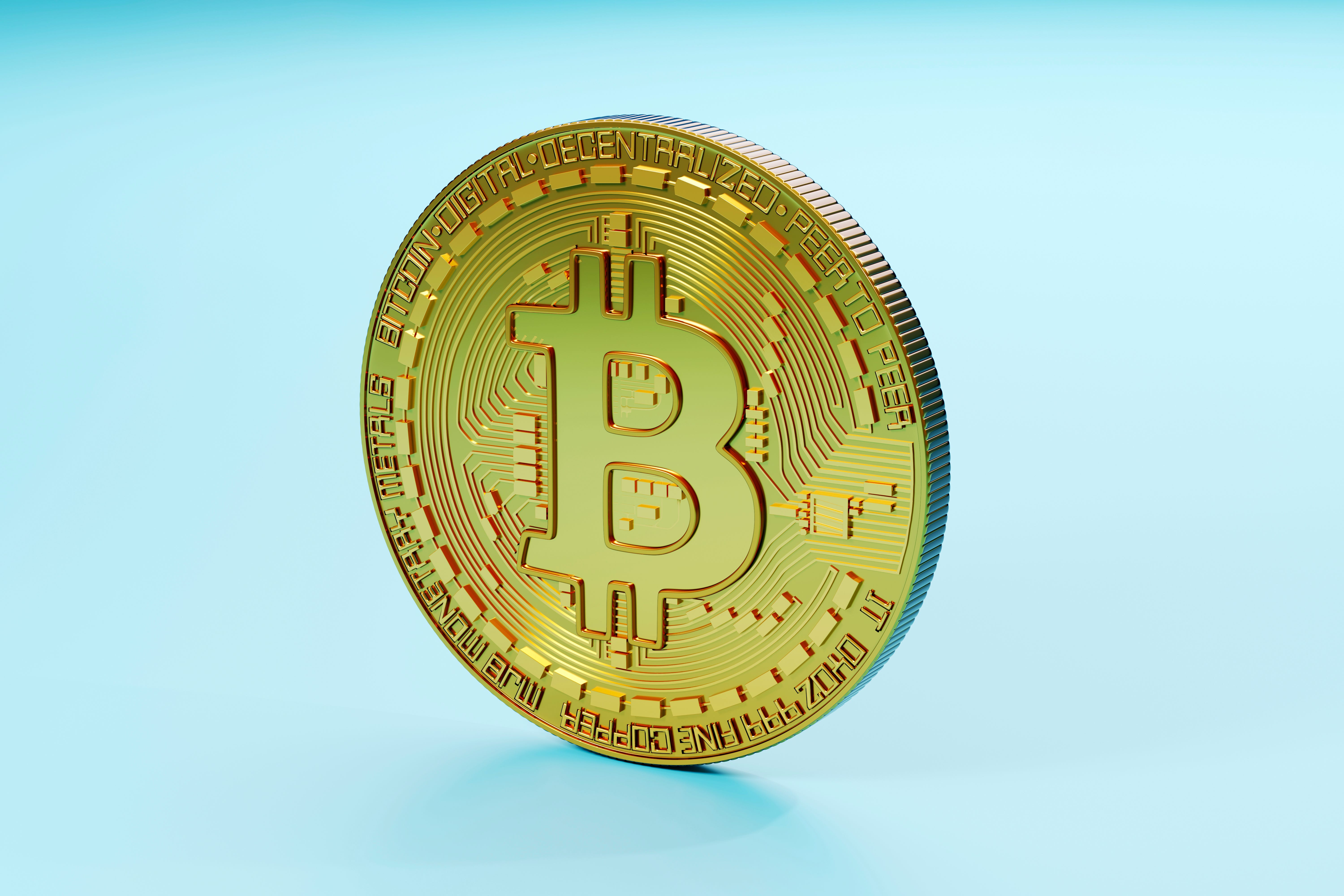
The men who can manage men manage the men who can manage only things, and the men who can manage money manage all.
–Will and Ariel Durant
Money predates writing which predates money. Wait, what?
It was the Sumerians who kicked a lot of this stuff off because they were the first agricultural community, so they had a head start. Like agriculture, writing also developed in isolation in various parts of the world and at different times, but it always began with the bean counters. Upper and priestly classes love to amass wealth, and that means taxes. And much like you need to prove you paid your taxes today to avoid prison (unless you’re a billionaire and you bribe people to change the law so you don’t have to), so too did people of ancient times. These taxes were paid largely via the food they grew, and when they handed it over, the powers that be made a record of it using different shaped tokens, depending on what product they represented, that were placed in a wet clay envelope impressed with a seal of office and left to dry to make it all official. The tokens were the earliest concept of money. Then some genius said wait minute, we can just press the tokens themselves into clay tablets and skip a step, so they quickly went from something that functioned like a coin to a written system of credit.
A variety of economic systems developed across human history. The Algonquin of what is now eastern Canada coined the term wampumpeag which refers to a white string of beads. This became “wampum” in many Indigenous cultures and was used as currency prior to and after European colonization. Made from clam shells, they weren’t easy to create, but their value wasn’t in the strings of beads themselves, but what everyone agreed they were worth. When Dutch and English colonists arrived, they adopted wampum as a currency for trade with Indigenous, and at one point even went to war with the Pequot over, in part, control of the trade in wampum. And while many people enjoy cigarettes (not me—bleh) and they have an inherent value as something to consume, in prison they attain a higher level of value as currency because the behemoth who is serving eight life sentences says they do.
Anyway, the earliest known writing is from about 3400 B.C.E. in the city of Uruk, using the aforementioned tokens pressed into clay tablets. So, money became credit via writing. Later, to facilitate trade over large distances, new and improved forms of physical money were created, as were agreed methods of currency exchange. Later still, people eventually we went back to focusing on written credit to the point that today less than ten per cent of the world’s wealth is physical currency. The rest of it resides on computers. It has value not because the murderous maniac in Cell Block D wills it, but because of something far more powerful: Nations. The United States has the most awesome military force the world has ever seen, and that’s why when the American government says their piece of paper with a dead enslaver’s face on it has a certain value, the world says yeah okay we believe you, because America can back that shit up. Cryptocurrencies, conversely, have been referred to as a Ponzi scheme, because there isn’t anything backing them up.
A Ponzi scheme, which is named after the early twentieth century scammer Charles Ponzi and is also illegal, is when early investors profit because of the inflow of money from later investors, who get screwed. If your Uber Eats driver starts talking about how great the latest cryptocurrency is, it’s too late to get in on the scam. He is the one about to be scammed. Some believe crypto to be akin to a Ponzi scheme because it doesn’t have the kind of government backing or inherent value national currencies do. They say it’s even worse than a Ponzi, because instead of being zero sum, where a few get rich and a lot get screwed, it’s negative sum because in addition to its fraudulent nature there is all the environmental damage from the tremendous amount of energy that goes into “mining” cryptocurrencies to consider. Perhaps I am being unfair. Crypto might not be a Ponzi scam. Maybe it’s a pyramid scheme. Or it might be a pump and dump. A reverse funnel system?
It seems money, in the form of tokens, predated writing, but only by a minute or two. Close enough to consider them conjoined twins, because the latter wasn’t created out of some great desire to one day weave tales of handsome elves punching holes through ugly orcs via their superior archery skills. No, it was created by a bureaucracy that needed to keep track of and stake claims of ownership to things of value. Those are my bags of grain, motherfucker. Hands off! The earliest writing was symbolic. Cuneiform was primary, in Mesopotamia, and the first symbols were quite literal. Later symbols were more abstract, but the earliest cuneiform script for “beer” looked a lot like a jug of beer. Speaking of beer, writing, and its connection to money, workers in Sumerian temples were often paid, in part, with that alcoholic beverage. When I think about my first low-paid jobs that was just cutting out the middleman, since it was where a good chunk of my paycheck was going anyway. What’s interesting, however, is cuneiform tablets from thousands of years ago reveal the first written examples of income disparity. The lowliest workers got paid only a liter of beer a day, more senior workers were paid two or three liters, and the people at the top received five liters. This doesn’t mean the boss was a total piss-tank who drank all that beer, the same way the cell block badass didn’t sit in his cell and smoke carton after carton of cigarettes. It was just another form of assessing and keeping track of what we consider valuable. And these values can change on a dime … pun intended? When U.S. prisons banned smoking, ramen noodles became the new currency of choice. Back in the world, if there is an apocalypse, you might as well wipe your ass with the paper in your wallet, and the numbers in your bank account will be as real as the Easter Bunny because the mythology supporting your hoarded wealth will evaporate in the harsh reality of how much food, guns, ammo, and medicine you stashed in a bunker for when the zombies come for that tasty brain of yours.
World War Z has not yet arrived, however; paper and plastic still spend, but you gotta work for it. Just how hard you must work depends on what rich people think. Work gets mathematically assessed for its monetary value by those who hold the most power. Such value assessments have never been based on effort, or the people who pick your produce would be some of the richest folks on the planet. Instead, the world decided some bigoted asshole who plays video games and shit-tweets all day should be worth a few hundred billion dollars. And despite being utterly horrible, countless others praise the man because money has an aura of sanctity attached to it; some not only worship the cash, but the people who have amassed a lot of it, believing they must be heavenly humans to be so financially blessed.
NOTE: This piece was researched and written by a human, not some bullshit “ai” plagiarism software.
Those who cannot remember the past need a history teacher who says “fuck” a lot. Get both volumes of ON THIS DAY IN HISTORY SH!T WENT DOWN.

Bitcoin is crashing and the AI bust will not be pretty either.
"... believing they must be heavenly humans to be so financially blessed."
It's not entirely their fault they're so stupid. Christianity has been brainwashing the faithful for generations that "God loves a cheerful giver." You give your last dime to God (or his jet-setting agent) now, and he will shower you with untold riches in return; if not next week, you'll get the loot after you die and take up residence in one of those heavenly mansions on the gold-paved boulevards up there in the sweet bye and bye. See: Prosperity Gospel.